

Yesterday I relapsed. Not alcohol, or drugs, or gambling, or anything of that sort. It was something worse: having an argument online.
Back when twitter was still called twitter I found myself getting into many an argument. Not because I wanted to, but because—at least back in those days—the algorithm encouraged it. A constant back-and-forth between two stubborn people is off-the-charts on all engagement metrics, so naturally it’s what people want to see and do online, right? Anyway, I promised myself that I would never get into a twitter argument ever again, and resorted to shitposting instead. Bliss.

But yesterday1 I broke that promise, getting into an argument with Vitor on the topic of “on-chain zaps”. I consider Vitor a friend, and I appreciate that he is pushing the boundary, as he always does. However, I think that encouraging users to associate on-chain activity with their online identity is misguided at best, and actively harmful at worst.
Before I get into the “why it’s bad” part of it all I’ll try to steelman Vitor’s arguments2 as I understand them. In short:
- Zaps are public anyway3
- Lightning setup is complicated4
- No setup required for on-chain, less friction for users5
- We have already built it and it works, so why not give users the option
As I’ve mentioned in the long back-and-forth thread with Vitor, I am not against the spirit of the idea. I think that every npub should be able to send and receive money with as little friction as possible, and have always been an advocate for things like npub.cash & nutzaps (NIP-60/NIP-61).
What I want to speak out against is the proposed implementation of the idea, which encourages bad practices and has the potential to actively harm users in the long run, for the sake of short-term “convenience” and “we can do it so why the fuck not” I guess.

Careful, Icarus
My initial reaction to seeing the proposal was “careful, Icarus” followed by “oh, that’s a terrible idea” right after - and it’s my reaction still. Just because we can build something doesn’t mean we should build something, as Jurassic Park was trying to teach us.
Yeah, yeah, but your scientists were so preoccupied with whether or not they could that they didn’t stop to think if they should.
But why? Why did the alarm bells of my intuition go off so hard? Why can’t I shut up about it and let Vitor and Alex have some fun to build this and play around with it? Because I’m pretty sure that people will end up using it and get terribly rekt, that’s why.
I was immediately like Ummm… wtf?!! but I couldn’t clearly articulate why it was so disturbing.
Same for me. I was incredibly disturbed, and couldn’t readily articulate why this supposed “feature” made me so uneasy. So I am sitting down now in an attempt to write about it, which usually helps to structure my thoughts. And who knows, maybe some of the younglings will read it, or maybe some of the nostr devs who don’t know too much about bitcoin can learn a thing or two about UTXOs and stuff.
Let’s get into it.
“Zaps are public anyway”
Yes, they are. Zaps are public. The balance of my lightning wallet is not public, however. The history of the sats I received isn’t public either, nor is the future of said sats.
I tried to make this point by posing the following questions: “All the zaps that I have received so far, what did I spend them on? Can you tell? Did I even move those sats at all? Where did the sats go after I’ve received them?”
Further, I could claim that I’ve lost access to my wallet, and there wouldn’t be a way to prove that this isn’t true. This type of plausible deniability completely flies out the window in an on-chain world.
Revealing More Than Necessary
Tying bitcoin addresses to identities is what chainalysis companies do. And even though their assumptions are based on heuristical witchcraft6 and should be taken with a huge grain of salt, the unfortunate reality is that the legal system takes said witchcraft seriously. We should make the job of chainalysis (read: spying on users) harder, not 100x easier.
“But zaps are public anyway!” Yes, they are, as I’ve admitted above. But you can choose to opt out, you can choose to zap privately, and your future financial activity is not forever tied to your identity. All that goes away with on-chain zaps.
I’ll just go ahead and quote Lola, since she hit the nail on the head:
Publicly tying your social media profile to one address forever is genuinely the biggest gift you could make to AML companies, ever. To get that money out without hurting the privacy of people you interact with you‘d need to jump through so many hoops that it defies the entire purpose of this legendary „ux upgrade“ in the first place.
She goes on to say, correctly, that right now, thanks to the Lightning Network, “[zaps] don’t dox you and everyone else you interact with for the rest of eternity.” And as we’ve already established above, “when I cash out my zaps, nobody knows where that money went to.”
“Privacy is the power to selectively reveal oneself to the world,” to quote a Cypherpunk’s Manifesto. Tying your identity to on-chain addresses not only nerfs that power, but takes it away from the individual permanently.
In short: using on-chain addresses for zaps is a terrible idea precisely because it reveals more than necessary. And to add insult to injury, it automatically makes this oversharing permanent.
Bad for the Sender
To understand why “on-chain zaps” are such a terrible idea you have to understand how bitcoin works. And I mean how it actually works. Not just a superficial understanding like “my private key is my bank account” and related inaccuracies.
There is no “bank account” in the first place, and there’s no “balance” either. There’s also no “bitcoins” and there’s no identity associated with transactions. There are inputs and outputs, and some of the outputs are unspent. We call these unspent outputs—surprise, surprise—unspent transaction outputs, or UTXOs. Conceptually, if bitcoin would be a physical thing like gold is, you could think of them as lumps of material (or “coins”) of various sizes.7 All we have is this unidirectional graph of transactions, and some neat cryptography (and proof-of-work) to link them together. That’s it.
The lack of identity in bitcoin is a feature, not a bug. Bitcoin is a pseudonymous system by design, which means that it can be used privately if you are careful about keeping your “on-chain identity” separate from your other identities (yes, plural8).
The consequence of all that is the following: if I send onchain bitcoin to you in a naive way, you can very easily “spy” on me by following the trail of transactions. It’s like a loose string that you can pull on, and depending on your time, resources, and motivation, you might be able to unravel the whole fabric of my past transactions. In other words: unless the sender is an educated bitcoin user who is well versed in bitcoin fundamentals and is adamant about UTXO hygiene and privacy best practices, the person who is sending funds via an “on-chain zap” will reveal way more than they intended via the deceptively simple act of “zapping” someone on-chain.
And that’s only half of the story. We only talked about unraveling the past, and we only talked about the sender side. Knowing the on-chain address(es) of someone allows anyone to spy on them in perpetuity. This is a well-known issue, and was discussed on the bitcointalk forums way over a decade ago:
Your inlaws can see that you’re buying birth control that deprives them of grandchildren, your employer learns about the non-profits you support with money from your paycheck, and thieves see your latest purchases and how wealthy you are which helps them target and scam you. Poor privacy in Bitcoin can be a major practical disadvantage for both individuals and businesses.
Yes, zaps are public, and that’s the point. But what preceded a zap and what follows it is not public, and shouldn’t be. It isn’t public right now because zaps use the Lightning Network, which has certain privacy characteristics that on-chain transactions do not (and will probably never) have.
So when I said that “Lightning is a sane default for zaps” that’s what I meant. Lightning does not allow you to spy on the financial activity of the sender (or the receiver) in perpetuity.
Using on-chain addresses for zaps not only allows this, but it makes it trivial.
Bad for the Receiver
You just got zapped. Great. It was an on-chain zap. Not so great.
What now? Well, the two basic options are “do nothing” and “do something.” Both are problematic, and here’s why.
Do nothing: If you don’t move the money, everyone will see how much money you have to your name, as was promptly demonstrated by “wrenchstr”, rich list, and other vibe-coded projects. You might not even know about the money, but by using your nsec to sign messages (read: you simply using nostr, logging in to something, or pressing a like button here and there) proves without a shadow of a doubt that you are still in control of your keys, i.e. the keys that can move the money. Bad for users. Fantastic for criminals. A wet dream for prying eyes.
Do something: You decide to move the money, which is to say: move the UTXOs that are now associated with your nostr identity. Maybe you want to move them to your cold storage, or maybe you want to buy something online, or spend it at a merchant directly, or maybe you want to send the money to a friend who isn’t on nostr yet. Whatever you decide to do, absolutely everyone in the world can follow the trail that these UTXOs leave behind. And some of the onlookers might have the means and the motivation to figure out what you did with your money, and use it against you.
None of the above is theoretical. For over a decade people have been robbed, extorted, kidnapped, or worse, just because other people thought (or knew) they had bitcoin. I encourage you to read through the list of known physical bitcoin attacks. And since I’m aware that people don’t read, much less click links, here are three highlights from the last ~18 months:
- A couple and their 20-year-old daughter were violently held captive by a group of criminals searching for bitcoins. (source)
- Three attackers invaded a home, tied up family, and made several bitcoin transfers. (source)
- A 38-year-old Chinese businessman was killed and found buried in the ground with his hands and feet bound with packing tape. (source)
The list is very long. The above aren’t the worst examples. I trust that you get the point.
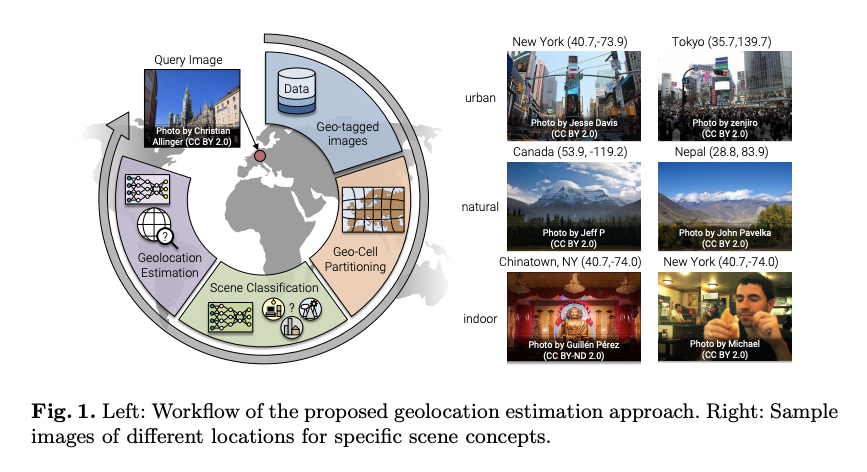
“But zaps are already public! What are you worried about?” I hear you shouting in protest. Yes, they are, but let me paint you a picture: Let’s say I’m a criminal, and I “on-chain zap” everyone on nostr. Some of my targets will inevitably move their UTXOs to cold storage, potentially combining what I’ve sent (and what I’m now tracking) with their main stash. I have a script running that notifies me of this (only if it’s above a certain amount, of course). A couple of days later I get such an alert. Jackpot. Generational wealth. I rub my hands as I browse nostr for the latest posts of my unsuspecting victim. Between memes and casual shitposts I find a link to a concert as well as an image they took on a stroll. There’s a mountain range in the background. I paste the image into a geolocation engine. It matches the concert location almost perfectly. I scroll further down and find multiple selfies and a photo of their dog. I now know where they live, what they look like, what their dog looks like, and where they usually go to take their dog on a walk.9
Do you get it now? Do you finally understand why associating on-chain activity with (nostr) identities is problematic? Do you understand why all of the above isn’t an issue when using Lightning?

Yes, zaps are supposed to be a public gesture (it is worth pointing out that private zaps do exist, however). But using on-chain for this public gesture is so, so much worse. Offering it as an option to users is incredibly dangerous, because warning the users properly (explaining the risk properly) is borderline impossible. You’d have to warn them about the past. You’d have to warn them about the present. You’d have to warn them about the future. You’d have to warn them that any potential attacker has undeniable, cryptographic proof that they, the target, are in possession of sats. You’d have to warn them that they can’t plausibly deny this fact because of the non-repudiation of digital signatures.
I’ve said it before, and I’ll say it again: plausible deniability matters.
The fact that multiple nostr developers don’t seem to get this point has me question my sanity. It also makes me question the supposed bitcoin expertise of some of the people involved. I saw that some nostr users are even starting to question the intentions behind this supposed “feature” in the first place, and I can’t blame them. I won’t go there (yet), but if this nonsense doesn’t stop soon I might be willing to.
Anyway… There’s more.
There’s actually a third category, in addition to doing nothing or something, namely wanting to do something but not being able to. Depending on output size and the current fee environment you might find yourself in a situation in which it’s literally impossible to get rid of the money (because the UTXO you received is below the dust limit).
There are scenarios that make this problematic. Let’s pick a ridiculous one, just for fun. Imagine a mafia boss coming to your house, giving you money that was made via illicit means. He vanishes instantly after, but not before leaving a trail that leads directly to you. A trail that’s very easy to pick up by the police as well as other mafia people. To make things worse, you had no option to refuse the money because the mafia boss is also a witch, and a spell was cast that deposited the money directly into your soul. And even worse than that, he cast the Pulvis Assaultus spell on top. Now the only way to rid your soul from the mafia witch dust is to throw more money at it.
Yes, a disappearing mafia witch is a ridiculous example, but I’m trying to make a point. A more realistic example would be someone sending money to you as well as to one (or multiple) addresses on the OFAC list, suggesting to law enforcement that you are part of a criminal network. Or publicly announcing that any money you receive will be forwarded to every address on this list, possibly incriminating any sender (as well as yourself).
Bad for Everyone Else
The thing that triggered me most when I first saw this proposal implemented is the fact that it’s mandating address reuse (by deriving a static address from an npub). Not only is this bad for the sender and the receiver, but also for other users that aren’t even involved in this particular onchain transaction!
Remember the UTXO model that we discussed above? The fact that there’s actually no “coins” in bitcoin, but only inputs and outputs? One of the consequences of this model is that, given that the ledger is public, the only way to have any privacy is to hide in the crowd.
Address reuse shrinks the crowd you can reasonably hide in.
This is bad. Really, really, really, bad. Or, to say it in a more fanciful way: “The relationship graph in a re-used address is powerfully-linked in that all of the inputs to that address are necessarily joined (via the spending authority of your private key) to all of its outputs.” That sentence has been in the bitcoin wiki for over a decade. It goes on to say that, consequently, “address reuse harms the privacy of not only yourself, but also others - including many not related to the transaction.”
It also weakens the cryptography of the associated private key.10
Bad.
Removing Choice and Agency
So now let’s get to the final point. “We have already built it and it works, so why not give users the option?”
It used to be that curiosity killed the cat, but in the internet age it might be more accurate to say that convenience killed the cat. And in today’s day and age of vibe-coded slop (well, slopified everything, to be frank) it might be more accurate to say that velocity killed the cat.
Don’t get me wrong, I’m a fan of high-agency activity and the “you can just do things” mentality. Always have been. But there’s a fine line between just doing things and just doing damage to things. I hate to see unsuspecting users get rekt, and if something insane like static-address-reuse-onchain-zaps-derived-from-npub ever gets widespread adoption,11 we’d be in a bad place.
As things are now, users are actively advertising how they can get zapped by putting a lightning address in their profile. What address to use is a deliberate choice, and you can also choose to not have a lightning address set at all, effectively opting out of zaps. Users are free to put a lightning address that is not under their control, and some users do, to either support someone else, or someone else’s project, or a charity, etc.
This type of choice is removed entirely if clients make a deterministically derived address the default.
I feel like a broken record when I keep saying that money and identity aren’t the same thing. “The whole point of money is to not know your customer,” to quote the Italian comedian once more.

That said, I think it’s fine to publicly state “this is how you can send me money” - which is, in part, what Lightning zaps do. With the proposed on-chain zap spec this transforms into something like “this is my identity-bound payment info and on top of that here are all my bank statements—past, present, and future—feel free to spy on all my financial activity forever.”
In some sense this move is similar to relying purely on biometrics as identification, as opposed to passwords (or other secrets). Convenient, yes, but biometrics are public, not private. They are usernames, not passwords. You can’t change them. Imagine someone scans your face and has deep insight into all your finances. That’s a problem, since changing your face is … difficult.12
I agree with Will that people who write software should abide by something like the Hippocratic oath. “Primum non nocere.” First, do no harm.
I tried to make this point with a ridiculous “surprise button” example. I won’t re-iterate it here.
But no, I don’t think we should ship an extremely reckless feature to thousands and thousands of people just “because we can.” That’s ridiculous.13
Silver Linings
My hope is that something positive will come from all of this. Tim is working on an implementation that uses silent payments, which would be a way to do this that isn’t entirely insane, as I’ve mentioned over and over and over again. There’s quite a bit of prior work when it comes to nostr and silent payments, although the motivation and use-case for said prior work was a different one.
Will, aka jb55, aka the guy who brought zaps to nostr in the first place, made a similar point:
onchain zaps don’t need to be tied to an npub. You can do onchain zaps via silent payments (this is the proper way to do it, not the retarded current spec)
He also has a point about dust amounts:
We can discourage people using dust amounts by automatically choosing lightning zaps for small amounts and onchain zaps over a certain limit.
That would get rid of unintended dusting, which is at least something. But it won’t get rid of malicious dust attacks.
At least there’s some sanity to be found. The discussion is ongoing.
Silent payments aren’t a panacea either, mind you. They are meant to be non-interactive, as Calle pointed out. And on top of that they will create on-chain transactions just the same, bringing fee pressure and bloating the UTXO set just the same.
One last thing: zaps and numerology go hand-in-hand. 21 sats here, 69,420 sats there, palindrome zaps, etc. We can’t do any of that if we hit the chain directly because broadcasting the exact amount would make it trivial for an attacker to identify the actual transaction. Which means any sane proposal would have to use blinded or otherwise obfuscated amounts, destroying a large part of what makes zaps interesting.
Long story short: zaps shouldn’t touch the chain, and I should finally climb down from Mt. Stupid and go touch some grass. It was a nice excursion. Good night.

TL;DR
On-chain zaps are bad, because:
- They strongly link identity and money
- They remove any and all plausible deniability
- They provide full insight into a user’s finances forever
- They can’t be disabled, revoked, denied, or redirected (dust)
- They encourage horrible privacy practices for sender and receiver
- They have negative effects on EVERYONE ELSE on the bitcoin network
By now it isn’t yesterday anymore, because it actually took me a couple of days to write this rant. ↩
The proposal is being pushed by Vitor and Alex, who are the lead developers of Amethyst and Soapbox/Ditto/Shakespear, respectively. ↩
Vitor and Alex made this point multiple times, both on nostr and on github. ↩
Setting yourself up with a Lightning wallet isn’t that complicated. I won’t defend this point; I reject the premise. Users are free to set their lightning address to
<user-npub>@npub.cashfor example, which makes them zappable instantly, as pointed out by Calle and others. ↩As evidenced by this response to one of my comments, the supposed friction that this proposal tries to reduce is added tenfold at the end of the journey, i.e. once users want to spend (or move) their on-chain funds. ↩
They even admit that chainalysis is “more of an art than a science.” ↩
I called this hypothetical material “bitcoinium” a very long time ago. ↩
Identity is prismatic, and always will be. ↩
Computers are really good at figuring out where a photo was taken, and have been for many years. I encourage you to read some papers like the one linked in the text, or simply look at this image. ↩
Listen to Aaron and Sjors discuss address reuse to learn more. Quote: “reusing Bitcoin addresses is a bad idea is because it opens up the possibility of some niche attacks. In certain cases, attackers could extract private keys from signatures after coins are first spent from an address — though this does require that a wallet implemented the signing algorithm incorrectly in the first place. There are also some potential future scenarios where quantum computers could extract private keys from signatures if addresses are reused. […] attackers can potentially derive a private key from a wallet by closely monitoring how the computer that hosts the wallet behaves when signing a transaction. This attack is more plausible if addresses are reused.” ↩
I’m not saying that it will. Nostr doesn’t have widespread adoption in the first place, and I doubt that educated users would ever use this. But then again: how many users are educated on these esoteric topics? And to make the point once more: the educated users can’t even opt out of the receiving end of things. ↩
The CCC showed this clearly a long time ago, by reconstructing a fingerprint from a photograph. In short: politician waves at camera, highres photo is taken, finger can be 3d-printed. (I’m simplifying, but you get the idea.) ↩
And don’t hide behind the “user choice” argument. It should be clear by now that onchain privacy is a rather esoteric topic with 2nd and 3rd order effects that aren’t exactly easy to grasp, so how confident can we be that users would be able to make an educated choice in the first place? Would we be willing to give users the choice to switch back to plain http for everything, just because it’s “faster” and “more convenient”? ↩
💜
Found this valuable? Don't have sats to spare? Consider sharing it, translating it, or remixing it.Confused? Learn more about the V4V concept.